Photography Basics
This section of my blog contains a comprehensive resource for taking better pictures.
Photographic Vision
Developing Photographic Vision Photographic vision:
Shoot a wide variety of techniques. You will become exposed to many visual ideas and experience. This then can be merged into a vision.
Keep shooting using different techniques, different subjects, break the rules, and worry less about what others think about your photos.
Shoot for yourself. If you are excited by what you are doing, you are on the right path to personal vision.
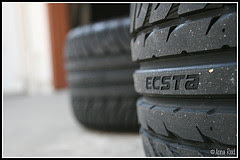

Depth of Field (DOF) is that amount of your shot that will be in focus.
Depth of field is governed by three factors: aperture, lens focal length and shooting distance.
*The smaller the aperture, the deeper the depth of field (the other two factors remaining the same).
*The shorter the lens focal length, the deeper the depth of field (the other two factors remaining the same).
*The greater the shooting distance, the deeper the depth of field. i.e. other two factors remaining the same).
There are times when you desire a great depth of field, i.e. where objects both close to you and far from you are in focus. This is especially true when you are taking a landscape picture and want as much as possible to be in crisp focus.
Large depth of field means that most of your image will be in focus whether it’s close to your camera or far away where both the foreground and background are largely in focus.
Then there are times when you want to isolate your subject, as when you are taking a portrait and want your subject to be in sharp focus but the background to be out of focus. In this case, you desire a shallow depth of field.
One way to influence DOF is by selecting the appropriate aperture.
The rule of thumb is this:
Select a large aperture (or small f/value or small aperture value), e.g. f/2.8, to obtain a shallow DOF
Select a small aperture (or large f/value or large aperture value), e.g. f/8.0, to achieve great DOF
Small (or shallow) depth of field means that only part of the image will be in focus and the rest will be fuzzy).
DOF also changes with focal length. Use a small focal length to increase DOF, a longer focal length obtain a shallower DOF.
Aperture and the Sweet Spot - sweet spot is the place where the lens is in its sharpest point. For most lenses (that go on DSLRs) this is somewhere between f/8 and f/11. Remember that when looking for sharpness in your picture.
Aperture is one of the three main controls you can use when you are taking a picture. Along with shutter speed and ISO, aperture controls how light will hit the sensor or film.
Aperture is referred to the lens diaphragm opening inside a photographic lens. The size of the diaphragm opening in a camera lens controls the amount of light that passes through onto the film inside the camera the moment when the shutter curtain in camera opens during an exposure process. The size of an aperture in a lens can either be a fixed or the most popular form in an adjustable type (like an SLR camera). Aperture size is usually calibrated in f-numbers or f-stops. i.e. those little numbers engraved on the lens barrel like f/22, f/16, f/11, f/8.0, f/5.6, f/4.0, f/2.8, f/2.0, f/1.8.
The larger the hole the more light that gets in - the smaller the hole the less light. "Stopping down" the lens from f/4 to f/5.6 will halve the amount of incoming light. "Opening up" the lens from f/5.5 to f/4 will double the amount of light.
Stopping down means to reduce the size of the iris of a lens. This increases the depth of field of the image, but results in dimmer images at the film plane. You can can compensate for this by increasing the exposure time (shutter speed),or increasing the ISO. Keep in mind that a change in shutter speed from one stop to the next doubles or halves the amount of light that gets in also - this means if you increase one and decrease the other you let the same amount of light in - very handy to keep in mind).

The best way to get your head around aperture is to get your camera out and do some experimenting. Go outside and find a spot where you’ve got items close to you as well as far away and take a series of shots with different aperture settings from the smallest setting to the largest. You’ll quickly see the impact that it can have and the usefulness of being able to control aperture.


